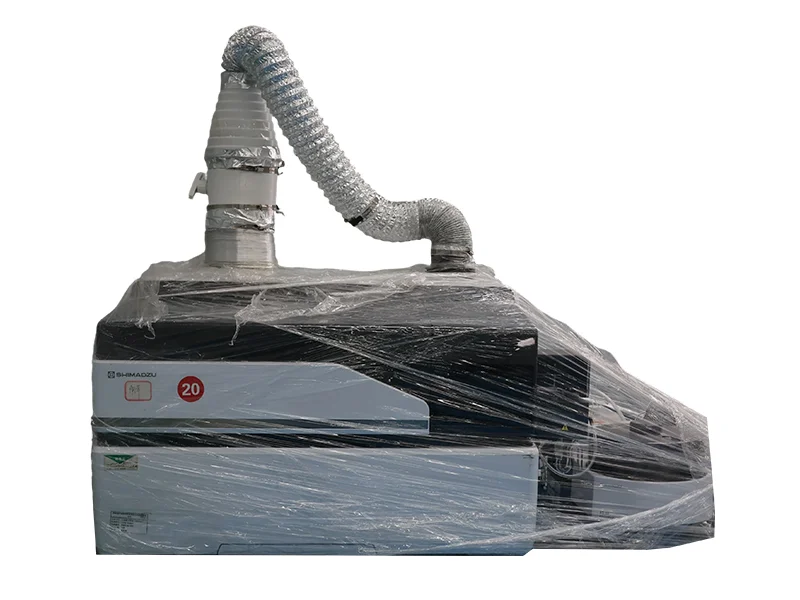
Low noise design: LF stands for “Low Frequency”. Its unique radio frequency power supply and ion lens system can significantly reduce background noise, and perform exceptionally well in detecting ultra-trace elements (such as ppb and ppt levels).
Efficient ion transmission: Utilizing an optimized ion optical system, it enhances ion transmission efficiency and ensures stable and accurate signals even in complex matrix samples.
Intelligent software and automation: The LabSolutions ICP-MS workstation is equipped with intelligent software and automation features, supporting method development, automatic tuning, data processing, and report generation; it is compatible with automatic samplers, enabling unmanned batch sample analysis.
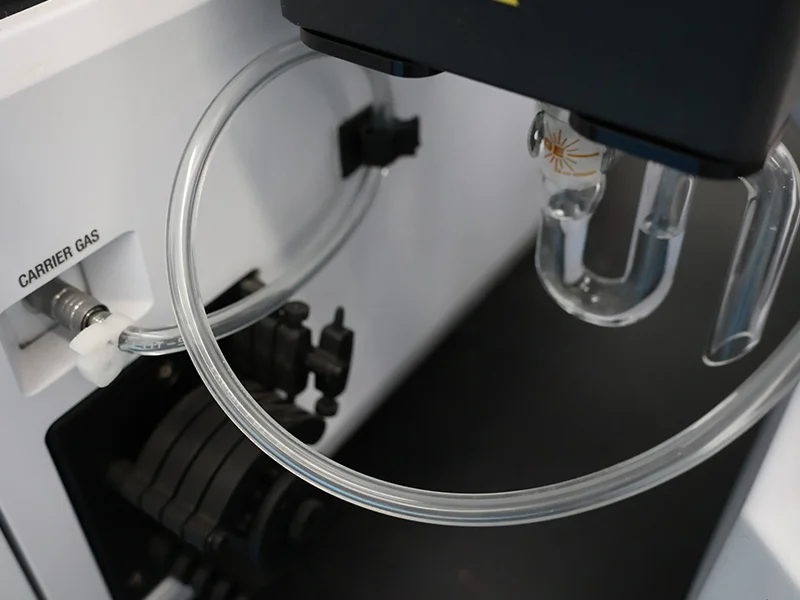
Maintenance convenience: The modular design makes it easier to disassemble and clean core components such as the ion source and cone, reducing downtime and lowering usage costs.
Wide dynamic range: It can simultaneously detect elements ranging from ultra-trace to high concentrations, eliminating the need for frequent sample dilution and improving analysis efficiency.
Simultaneous analysis of multiple elements: One sample injection can complete the qualitative and quantitative analysis of most metal elements, non-metal elements (such as P, S, As), and some isotopes in the periodic table.
Isotope ratio determination: Used for precise measurement of isotope ratios in fields such as geological tracing, food authenticity verification, and environmental tracing.
Fast screening capability: For complex samples (such as blood, soil, wastewater), it can complete the rapid screening of dozens of elements within a few minutes.
Matrix tolerance: Through the collision/reaction cell technology (CRC), it effectively eliminates interference from multi-atomic ions and is suitable for analyzing complex matrix samples with high salt content and high organic matter.
Typical application scenarios:
– Monitoring and detecting heavy metals (Cd, Pb, Hg, As) and trace pollutants in surface water, groundwater, soil and atmospheric particulates, meeting strict limit requirements stipulated by environmental protection regulations.
– Analyzing harmful elements (such as heavy metals, rare earth elements) and nutritional elements (Fe, Zn, Se) in food and agricultural products to ensure food safety and quality.
– Detecting trace element levels in blood, urine, and tissues for disease diagnosis, drug metabolism research, and toxicological assessment.
– Conducting ultra-trace analysis of impurities in high-purity chemicals and metal contaminants on wafer surfaces to ensure the purity and performance of electronic materials.
– Determining trace elements and isotope ratios in rocks and ores for mineral deposit genesis research and resource exploration.
– Testing metal residues in raw materials and preparations for pharmaceuticals to comply with ICH Q3D and other regulations on element impurities.